
“You may not need a million dollar painting on the wall, but you have to have a chair to sit on, and it might as well be an antique one.”
Old-timers—like those who remember the author of the above remark, the late Robert Woolley of Sotheby’s—will remember what the art market was like in 1990. It was a tale of two cities.
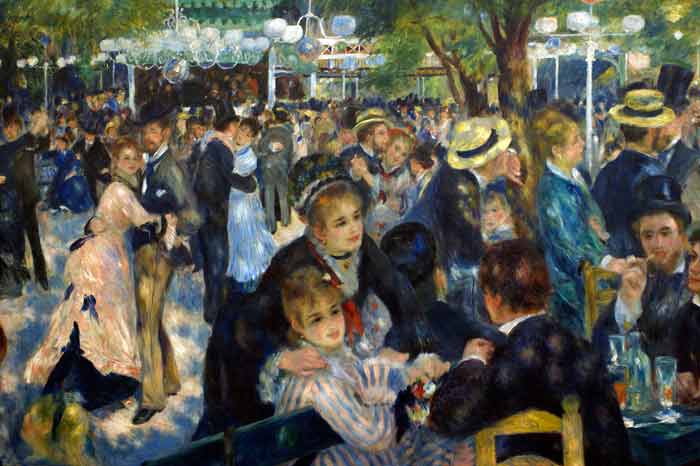
The first half of that year was dominated by fireworks. Japanese collectors and speculators had for years driven the price of Impressionist and Modern art to unprecedented levels, with no end in sight. The very peak of this runaway market was reached in May 1990. On a Wednesday evening at Christie’s, Van Gogh’s Portrait of Dr. Gachet brought $82.5 million. On Thursday night at Sotheby’s, Renoir’s Au Moulin de la Galette made $78.1 million. A Japanese tycoon bought both paintings.
But the second half of the year was a disaster. As the Japanese bubble economy imploded, so did the art market. That November the Collection of Henry Ford II was offered, with many choice Impressionist works. But buyers were scarce, and Sotheby’s lost millions on its guarantee.
I mention this because of what happened next. While the auction houses went searching in vain for Impressionist paintings to sell, their survival was greatly aided by sales in other, less-glamorous collecting fields, such as porcelain, silver, carpets and furniture. These were the meat-and-potatoes departments, long overshadowed by Impressionist art but now suddenly, ironically, back in the bright lights, with sales both steady and profitable. Thus with a sly wink Sotheby’s hailed 1991 as The Year of the Decorative Arts, as if a new golden age had dawned.
We are now at a similar turning point in the global art market. A disaster has occurred and we await recovery. As in 1990, today’s market is defined largely by sales of expensive paintings, the only difference being that Post-War and Contemporary art has now supplanted Impressionism in pre-eminence. The major players in the art market—the dealers and the auction houses—may be reeling from loss of revenue, but they are resourceful at finding new ways to prosper. Already Sotheby’s and Christie’s have scheduled major paintings sales for late June, with novel presentations.
But what of the Decorative Arts? Over the years they have faded in importance and been marginalized, with fewer sales at auction and an aging clientele.
And yet I believe they’ll rebound. More than ever collectors will pursue things of enduring craftsmanship and quality, ones overlooked in the current market. Perhaps “antiques” will make a comeback.